You found it. The craftsman with the built-ins. The mid-century with the big windows. The older home with the yard that actually feels like a yard.
In the Pacific Northwest, homes with character are everywhere, and they sell fast.
So you do what most buyers do: you fall in love with the parts you can see.
- The roof looks decent.
- The furnace is newer.
- The kitchen has been updated.
Then closing day comes. The keys are yours. And within the first few weeks (sometimes the first few days), the dream gets interrupted by a smell, a slow drain, or a backup that turns your new home into an emergency.
That’s the moment many buyers learn a painful truth: You didn’t buy just a house. You bought the sewer line, too.
If you’re buying an older home in Seattle, Bellevue, Everett, or anywhere in the Greater Seattle area, a sewer scope (also called a sewer camera inspection) isn’t a nice-to-have. It is one of the smartest, lowest-cost ways to avoid a high-stakes post-purchase surprise.

The Story We See Over and Over (And Why It’s Avoidable)
A buyer moves in. Everything seems fine. Then they run the dishwasher and the laundry at the same time. Or they host friends for the first time. Or a heavy rain hits.
Suddenly:
- The downstairs shower backs up.
- The toilet gurgles.
- There’s a sewage smell in the basement.
- The yard has a wet spot that won’t dry.
They call for help, expecting a simple clog. But the camera tells a different story: a belly in the line, offset joints, severe root intrusion, or a section that’s starting to fail.
Now the buyer is facing a repair or replacement that can cost thousands, and it’s happening when they’ve already stretched their budget to buy the home.
The hard part isn’t just the cost. It’s the timing.
A sewer scope shifts you from reacting under pressure to making an informed decision.
What Is A Sewer Scope?
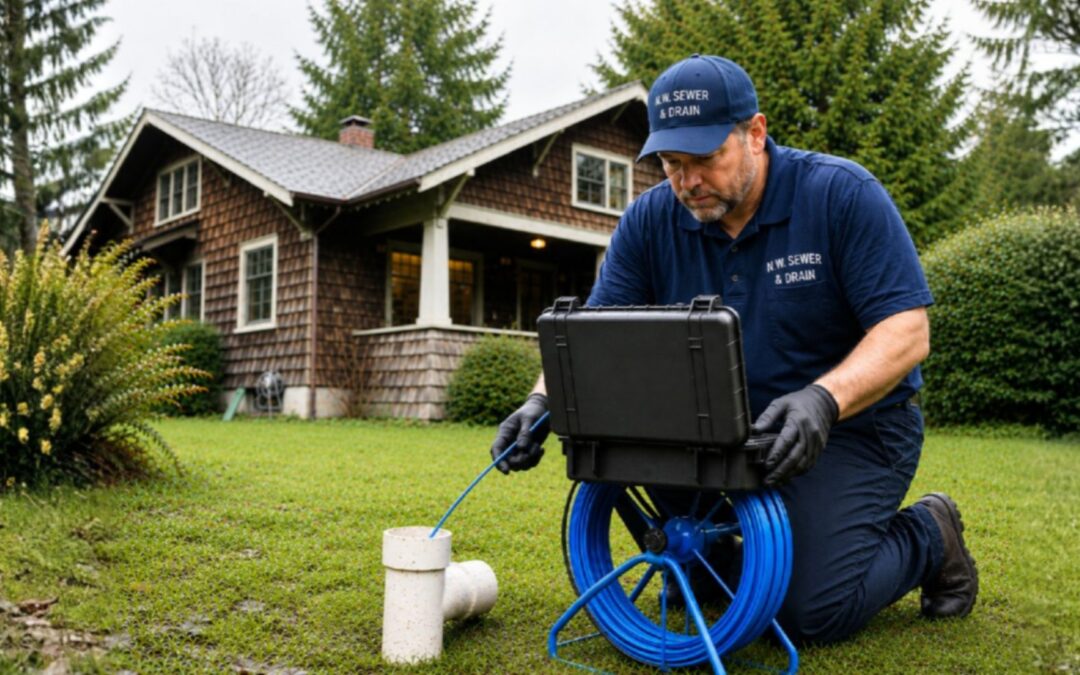
A sewer scope is a video camera inspection of the home’s sewer line. A technician runs a specialized camera through the line to see what’s happening underground where you cannot see, and where problems can hide for years.
It’s typically a few hundred-dollar inspection that can reveal issues that might otherwise become a several-thousand-dollar problem after closing.
Why Older Homes in The PNW Are Higher Risk
Older homes aren’t bad. They’re just more likely to have sewer lines that have been through decades of:
- Tree root growth
- Shifting soils and settling
- Heavy rainfall and saturated ground
- Aging pipe materials
- Past repairs that weren’t done to modern standards
Even if the home has been remodeled, the sewer line may still be original. And because sewer lines are out of sight, they’re often out of mind, until they’re not.
What We Look for During a Sewer Scope (And What It Means for You)
A sewer scope isn’t just is there a clog? It’s is this line healthy enough to trust?
Here are some of the most important issues we look for during an inspection.
Bellied Pipes (aka Sags)
A sewer line belly is a low spot in the sewer line where water and waste collect instead of flowing smoothly.
Why it matters:
- Waste can settle and build up over time
- You’ll often get recurring clogs
- It can be a sign of poor grading or soil movement
A belly doesn’t always mean immediate replacement, but it’s a major negotiating point and something you want to understand before you buy.
Offset Joints
An offset joint happens when pipe sections shift out of alignment.
Why it matters:
- Paper and waste snag on the lip
- Roots can enter more easily
- It increases the chance of backups
Offsets are common in older lines, especially where the ground has settled over time.
Severe Root Intrusion
In the PNW, tree roots are one of the biggest causes of sewer line problems. Roots seek moisture. Tiny cracks and joints become entry points. Over time, root growth can narrow the pipe or create a full blockage.
Why it matters:
- Clearing roots may be a temporary fix if the pipe is damaged
- Repeated root problems often indicate failing joints or cracks
- It can turn into an emergency during heavy rain or high water use
Cracks, Corrosion, And Failing Pipe Material
Older lines may show:
- Cracking
- Corrosion
- Rough interior surfaces that catch debris
- Sections that are close to collapse
This is especially important in older neighborhoods where original materials are still in place.
Standing Water, Slow Flow, Or Heavy Buildup
Sometimes the camera shows the line is technically open, but it’s not healthy. If we see heavy buildup or restricted flow, we can often recommend the least disruptive next step to improve performance and reduce risk.

The Real Value: Leverage Before You Close
A sewer scope gives buyers and agents something priceless: leverage while you still have options. Depending on what the inspection shows, you may be able to:
- Request repairs before closing
- Negotiate a credit or price reduction
- Ask for additional specialist evaluation
- Walk away from a high-risk situation
That’s not being picky. That’s being smart.
For Real Estate Agents: This Is How You Protect Your Client (And Your Reputation)
Great real estate agents don’t just open doors. They help clients avoid avoidable mistakes. Recommending a sewer scope on older homes positions you as:
- Thorough
- Proactive
- Client-first
It also reduces the chance you’ll get the call after closing that starts with, “We’ve got a problem”, and ends with frustration.
If you work with older homes regularly, having a reliable sewer inspection partner makes the whole transaction smoother.
Make A Sewer Scope Simple by Partnering with N.W. Sewer & Drain
Here’s a straightforward approach that keeps everyone calm and informed.
- Schedule the sewer scope during the inspection window: The earlier you do it, the more flexibility you have.
- Get clear video findings (not vague guesses): You want to know what’s there, where it is, and what it means.
- Choose the right next step only if needed: Sometimes the answer is “Looks good.” Sometimes it’s cleaning. Sometimes it’s pipe repair. The point is: you’ll know.
If you’re buying an older home in the Greater Seattle area, N.W. Sewer & Drain can perform a sewer video camera inspection, explain what we’re seeing in plain English, and help you understand your options before you’re locked in. To schedule a sewer scope or ask a quick question before your inspection window closes, contact N.W. Sewer & Drain now.