If you live in an older Seattle home, you probably know the feeling: the house has character, the neighborhood has history, and the trees are mature enough to shade the whole block. But the plumbing? The plumbing is rarely the charming part.
For a lot of homeowners in Seattle’s historic neighborhoods, the first warning sign is small; one slow sink, a tub that takes longer to drain, a faint sewer smell that comes and goes. It’s easy to shrug off until it becomes the kind of drain problem that changes your whole week.
And when that happens, most people assume they have only two options:
- Keep paying for drain cleanings that don’t last
- Replace the entire line (expensive, disruptive, stressful)
There’s often a third option that gets overlooked: pipe descaling, especially when your home still relies on cast iron.
This guide from N.W. Sewer & Drain explains what’s happening inside older pipes, why descaling works, and how it can help you avoid full pipe failure.

The Story We See All the Time in Older Seattle Homes
A homeowner calls because their drains have been “acting up” for months. They’ve snaked the line. Maybe they’ve tried chemical drain cleaners. Maybe they even had a basic cleaning done and things improved… for a little while.
Then the same symptoms come back:
- Slow drains across multiple fixtures
- Gurgling sounds when water runs
- Recurring clogs that feel random
- Backups that happen at the worst possible time
At that point, the homeowner isn’t just looking for a quick fix. They want to know what’s actually going on. In many older Seattle homes, the answer is simple: Cast iron pipes are strong, but they don’t stay smooth forever.
Why Cast Iron Pipes Clog Differently Than Newer Pipes
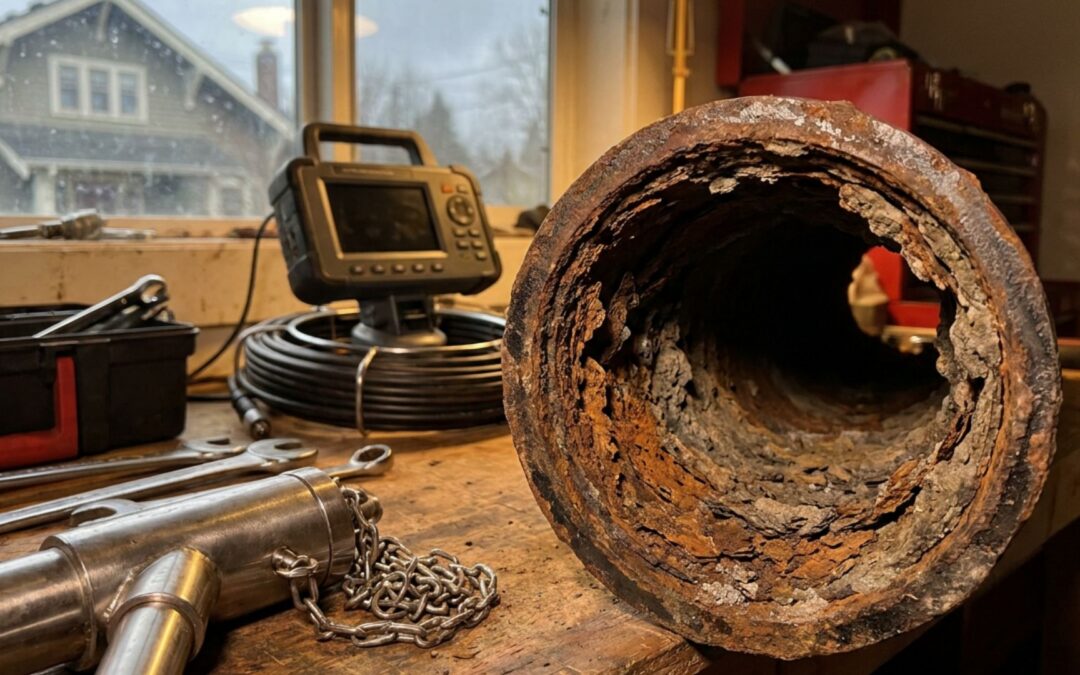
Cast iron was used for decades because it’s durable and handles heat well. But it has a big weakness over time: corrosion and scale buildup. As cast iron ages, the inside of the pipe can develop:
- Rust and corrosion
- Mineral scale
- Sludge and biofilm
- Rough, uneven surfaces that grab onto debris
Instead of a smooth tunnel, the inside of the pipe starts to look more like a rocky riverbed. That roughness catches:
- Grease
- Soap scum
- Food particles
- Hair
- “Flushable” wipes (not actually flushable)
So even if you clear a clog today, the pipe is still narrowed and rough, meaning it’s more likely to clog again.
What is Pipe Descaling, Exactly?
Pipe descaling is a process that removes hardened buildup from the inside walls of a pipe. Think of it like this:
- A standard drain cleaning is like clearing a traffic jam.
- Descaling is like widening the road and smoothing out the potholes so traffic doesn’t keep getting stuck.
Descaling is especially useful for cast iron because it targets the thick, stubborn scale that water alone won’t remove.
How The Pipe Descaling Process Works (In Plain English)
Descaling isn’t guesswork. It’s a step-by-step process designed to restore flow and reduce recurrence. Here’s what it typically looks like:
- Camera inspection to see what’s happening: Before anyone recommends a solution, you want to confirm what’s inside the line using a sewer camera inspection: scale, roots, offsets, cracks, or collapse.
- Mechanical descaling to remove hardened buildup: Specialized tools are used to break up and scrape away scale from the pipe walls.
- Flush and cleanup: Once the scale is loosened, the line is flushed to remove debris and restore flow.
- Post-descaling camera verification: A second look confirms what was removed and whether the pipe is structurally sound.
How Descaling Can Save Cast Iron (And When It Can’t)
Descaling can be a smart way to extend the life of cast iron pipes, when the pipe still has structural integrity. Descaling helps most when:
- The pipe is narrowed by scale but not collapsed
- You have recurring clogs that return after snaking
- Flow is restricted across multiple fixtures
- The camera shows heavy buildup but no major breaks
Descaling may not be enough when:
- The pipe is collapsed or severely offset
- There are large cracks or missing sections
- Root intrusion is extensive and the pipe joints are failing
That’s why the camera inspection matters. It tells you whether descaling is a long-term win, or whether repair/replacement is the safer move.

Why This Matters in Seattle’s Older Neighborhoods
Seattle has plenty of areas where older homes and older pipes are common, especially where mature trees, shifting soils, and decades of use all stack the odds against aging lines. Even when a house has been beautifully updated above ground, the sewer line may still be original.
And here’s the part homeowners don’t love hearing but appreciate knowing: cast iron rarely fails all at once without warning. It usually gives signs first. The earlier you address the buildup, the more options you have.
The Plan: How To Protect Your Drains Without Jumping Straight to Replacement
If you’re dealing with slow drains or recurring clogs in an older Seattle home, here’s a simple plan that keeps you out of panic mode.
Step 1: Confirm The Cause
If it’s scale, descaling and drain cleaning may help. If it’s roots, you may need a different approach. If it’s a break, you’ll want to talk repair.
Step 2: Choose The Least Disruptive Fix That Actually Lasts
The goal isn’t “clear it today.” The goal is “stop the cycle.”
Descaling is often the missing middle step between basic cleaning and major replacement.
Step 3: Make A Prevention Call, Not An Emergency Call
When you handle cast iron buildup proactively, you’re far less likely to deal with:
- Sewage backups
- Water damage
- Emergency weekend calls
- Surprise repair decisions under pressure
What Homeowners Usually Notice After Descaling
When descaling is the right fit, homeowners often report:
- Faster draining across the house
- Fewer recurring clogs
- Less gurgling and odor
- Better flow and performance overall
It’s not “new pipe,” but it can be a meaningful reset, especially for pipes that have been slowly narrowing for years.
The Best Time to Descale Is to Call In N.W. Sewer & Drain Before the Pipe Fails
If your Seattle home has cast iron pipes and you’re noticing slow drains, recurring clogs, or backups that keep returning, it’s worth finding out whether scale buildup is the real culprit.
The experts at N.W. Sewer & Drain can help. Our crew can inspect the line, show you what’s going on, and recommend the most practical next step, whether that’s descaling, cleaning, trenchless repair, or replacement. When you’re ready to get answers (not guesses), contact N.W. Sewer & Drain!