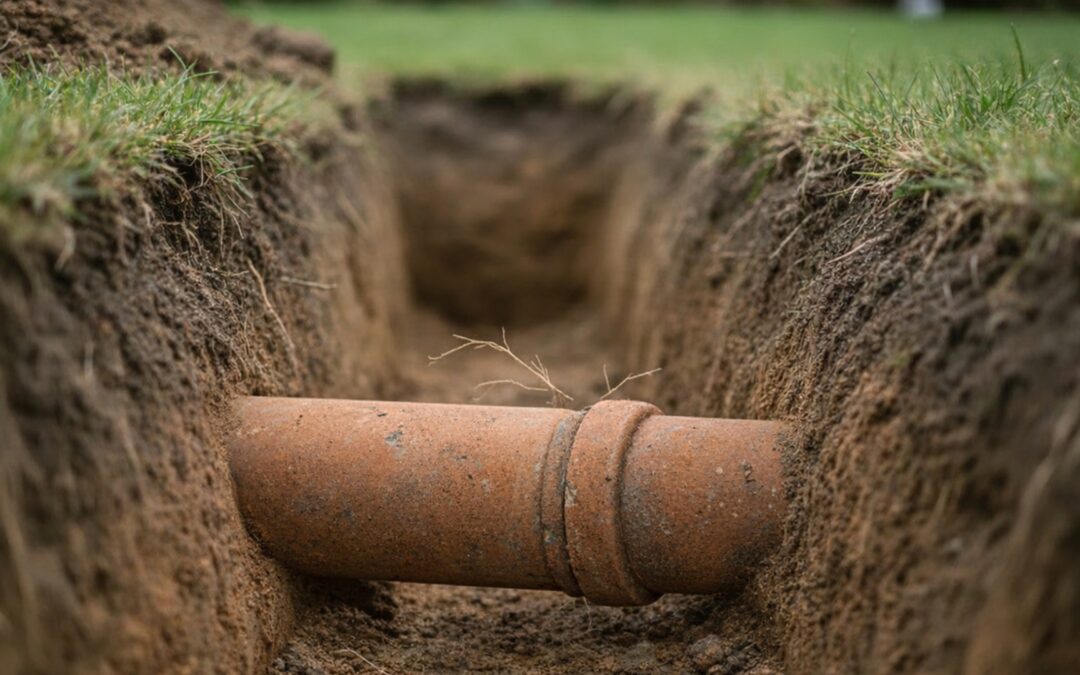
Clay sewer pipes are common in older homes and older neighborhoods, especially in the Greater Seattle Area, and they can work well for decades. The problem is that clay pipe systems often have joints that are more vulnerable to shifting soil and tiny gaps over time. And once there is a gap, root intrusion becomes a real risk.
If you have ever dealt with a recurring sewer line clog, slow drains that keep coming back, or a surprise sewer backup, there is a good chance roots are involved, especially if your property has mature trees.
The experts here at N.W. Sewer & Drain are breaking down what tree root intrusion looks like in clay pipes, what warning signs to watch for, and how to prevent it before it turns into a bigger sewer line repair.

Clay Pipes and Roots Are a Predictable Conflict
Tree roots naturally seek moisture and nutrients. Your sewer line carries water and organic material, so even a tiny leak at a joint can attract roots.
In many cases, roots do not burst into the pipe all at once. They start as hair-thin strands, then slowly expand. Over time, they catch toilet paper, wipes, grease, and debris, turning a small entry point into a recurring main sewer line clog.
What Root Intrusion Looks Like in Clay Pipes
Most homeowners do not see roots directly until a plumber or sewer expert runs a camera. But the symptoms are often consistent.
Early Stage: Slow Drains and Repeat Clogs
In the early stage, you may notice a slow drain in one or more fixtures. You might clear it, and it seems fine, until it comes back.
That pattern matters. A clog that returns is often a sign of a deeper sewer line problem, not just a local blockage.
Middle Stage: Gurgling, Odors, And Multiple Drains Affected
As tree roots grow, they restrict flow. That can cause gurgling sounds, sewer odors, and the classic sign: multiple drains clogged at once.
If you are seeing a clogged toilet plus a slow tub and sink, you may be dealing with a developing main drain clog.
Late Stage: Backups and Potential Pipe Damage
In the late stage, roots can create a dense mat inside the pipe. Wastewater cannot pass through easily, and you may experience a sewer backup or water coming up from a floor drain.
Roots can also worsen existing cracks or joint separation. In severe cases, shifting soil plus root pressure can contribute to a broken sewer pipe or collapsed sections.
The Fastest Way to Confirm Root Intrusion
The most reliable way to diagnose roots is a sewer camera inspection. A sewer video camera inspection shows exactly where roots are entering, how severe the intrusion is, and whether the pipe has cracks, offsets, or other damage.
This matters because the best fix depends on what the camera shows. Clearing roots without addressing the entry point can lead to repeat clogs.

How To Remove Roots from A Clay Sewer Line
Root removal typically involves professional equipment designed for main lines.
Depending on the severity, a drain specialist may recommend:
- Mechanical cutting to break up roots
- Hydro jetting to flush debris and scour buildup after cutting
- Main line drain cleaning to restore flow through the full diameter of the pipe
If the pipe is damaged, clearing alone may not be enough, and that is where repair options come in. Thankfully, today there are more repair options than ever before.
How To Prevent Root Intrusion in Clay Pipes
Prevention is about two things: reducing root access and keeping the line flowing.
1) Get Proactive Inspections
If your home has clay pipes or mature trees, a periodic sewer camera inspection can catch early root growth before it becomes a full sewer line clog.
2) Address Recurring Clogs the Right Way
If you are calling for drain cleaning repeatedly, that is a signal. A recurring clogged drain often means there is an underlying cause like roots, pipe scale, or a damaged joint.
3) Be Careful with What Goes Down the Drain
Roots love the debris that gets trapped around them. Avoid sending wipes, grease, and heavy food waste into your system. The cleaner your line stays, the less fuel roots have to build a blockage.
4) Consider Long-Term Repair If Roots Keep Returning
If roots return quickly after cleaning, it may be time to repair the section where they are entering.
In many cases, trenchless sewer pipe repair can address damaged sections with less disruption than traditional excavation. Depending on the situation, trenchless pipe repair or replacement may restore the line and help prevent repeat root intrusion.
Get Fewer Emergencies and A More Reliable Sewer Line with N.W. Sewer & Drain
Root intrusion in clay pipes is common, but it is not something you have to live with. When you identify the cause early, confirm it with a sewer camera inspection, and choose the right combination of cleaning and repair, you can avoid repeat clogs and reduce the risk of a messy sewer backup.
If you are seeing recurring slow drains, gurgling, or multiple drains clogged symptoms, do not wait for it to escalate. The sooner you address tree roots in sewer line issues, the easier it is to protect your home and your property. Contact N.W. Sewer & Drain now and take preventative measures before your problem gets out of hand!